
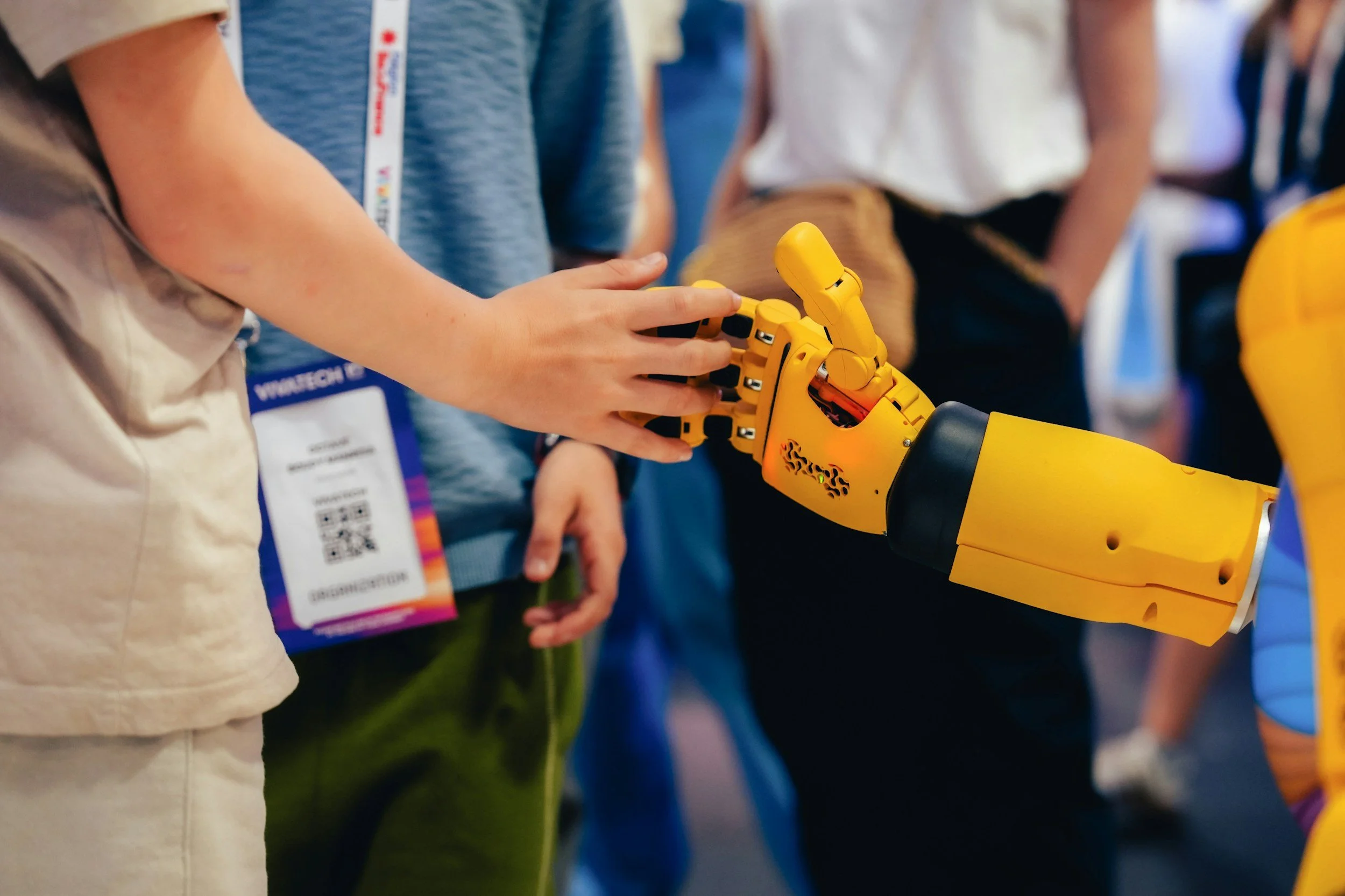
ARTIFICIAL INTELLIGENCE
Understanding how AI shapes our world, and learning how to use it wisely
Unless you are living a secluded life, cut off from technology, AI is already part of your daily life. It has entered almost everything we consume, and within five years it will not be a part of our lives but almost the totality of them.
If we want to remain deeply and successfully human, we need to learn about AI, and learn with it, as much as we can. We had better know what we are embraced by.
“Artificial Intelligence, as a life intelligence, is understanding how AI is shaping our world, and learning to use it wisely, without losing what makes us human.
It belongs in a framework for human flourishing because this is not a small change. It is not even a revolution; it is a shift.
AI will redo our jobs, our medicine and our education. It alters how we receive information, how we think and how we behave. And it reaches further still: technologies of life enhancement and longevity change our very understanding of life and death, and of what a human self is.
AI is not only a technological question. It is a philosophical one.”
What is Artificial Intelligence changing right now?
Work is being redone. Not only what we do, but how we approach work, and whether we have work at all. One of my clients, a middle manager who works with dozens of AI agents, told me: “I think three years, maximum, and I’ll be replaced by my AI agents.”
Education is being reshaped. Knowledge is now accessible far beyond universities. Two senior clients with executive MBAs from leading universities told me that what they really gained was the network and the discipline; the knowledge itself they could have acquired another way.
How we think is changing. AI alters our attention: few people read long texts any more, especially the young; they want the short version of everything. It also alters how we think. I work with AI myself, and I know there are lines: cross them, and you stop thinking, because AI does it for you. I deliberately do not cross them. But many people do, often under pressure to produce more and more, without considering what it does to their own minds.
Three dimensions of Artificial Intelligence
Understanding the shift
Knowing what AI is changing in your profession, your life and the wider world, and what may be coming.
In medicine, a sensor on your hand may soon communicate with a database twenty-four hours a day, in place of sophisticated tests.
Universities, in the shape they exist today, will be reshaped. If you want to keep pace in your professional field, you cannot do without this understanding.
Learning with AI, consciously
AI makes knowledge far more accessible than it has ever been, and communicates it in a simpler way. If we master the technology, we can do things that are unimaginable today.
What matters is how it is integrated: properly and ethically, in our decisions and our problem-solving, refined for good purposes.
Use AI to learn faster and more widely, without handing over your own mind.
Remaining deeply human
Some things AI is unlikely to replace, at least not soon, and perhaps never.
Being accepted and valued as a person by a machine is not the same as being accepted and valued by another human person.
Nor, I believe, can any AI, however sophisticated, replace contemplative practice: our soul’s relation with the sublime.
Signs that Artificial Intelligence is underdeveloped
You do not engage with AI at all. Not even the freely available tools, the large language models that so many people now use every day.
You have no interest in where technology is going. You do not read about it, or consider what it means for your life or for society.
You hand over your thinking. You cross the lines without noticing, letting AI think for you because you are under pressure to produce more.
You assume your position will protect you. In my experience, the more senior and secure people are, the less they worry about AI; wealth gives a sense of security.
When the shift arrives, and it is arriving very soon, others will be more prepared.
What changes when you develop Artificial Intelligence?
You are prepared. When the shift arrives, you are not overtaken by it.
You keep learning. Knowledge has never been more accessible, and you make use of it.
You expand what you can do. If we master the technology, we can do things that are unimaginable today.
You keep your mind your own. You use AI as one of your major tools, while protecting your capacity to think for yourself.
You know what in you is irreplaceable. Being accepted and valued by another human person cannot be replaced by a machine, and you invest in it.
Artificial Intelligence touches every other intelligence, because it changes the world they all operate in.
Its deepest effect is a paradox: the more AI shapes our lives, the more we will need what is most human.
As uncertainty grows, I believe people will turn inward, towards themselves and the mystical, and outward, towards one another. Small communities will pop up like mushrooms, as people reach out to one another.
How we work together:
Together, we look at how AI is touching your profession and your life, and how to learn about and with it, while strengthening what only you can bring. Many people arrive with one fear: that what they have worked for all their lives may disappear. We turn that fear into preparation, as far as our imagination allows.